آپ کے مینیجرز کا مسئلہ نہیں ہے۔ وہ انضمام کی پرت ہیں۔
Until 2022, my wife Sahar and I lost two weeks every quarter to WhatsApp. Before you picture us chatting, those two weeks went on reading everything our field teams had sent us since the quarter before.
پیس تھرو پراسپیریٹی, the social innovation lab we co-founded in 2011 and still run, works with micro-entrepreneurs in marginalised communities. In Pakistan, Yemen and Egypt our field teams run a free mini-MBA: two hours of teaching a day for three or four days, then three months of one-to-one coaching and monthly group workshops, with several cohorts running at once.
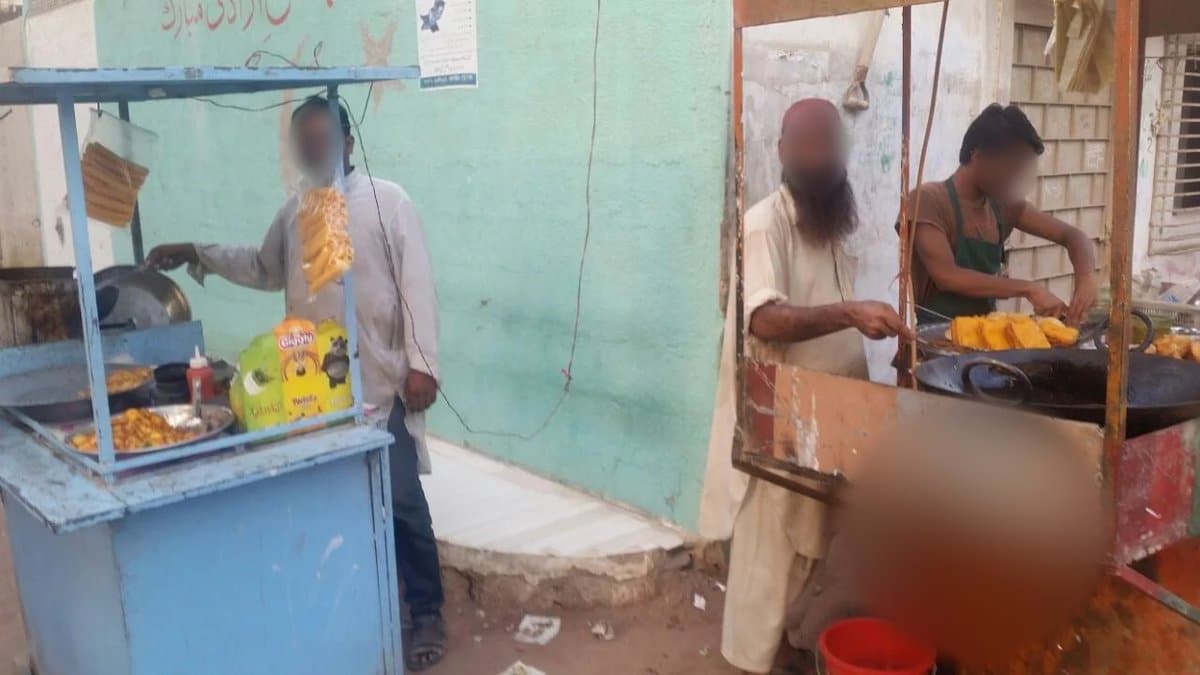
The field teams report the way people report when nobody has designed it for them: a running commentary every other day, if not every day, with photos and videos from the workshops, voice notes, pictures of handwritten ledgers, canvases and Post-it notes, Excel sheets, and interview videos with participants past and present, all of it on WhatsApp, while partner organisations wrote to us by email.
Every quarter someone had to turn all of that into something we could decide with, our own version of status reporting, and that someone was us, in the evenings and on top of our day jobs. It had been the routine since 2012.
When there was one team in Pakistan the routine was fine, and it didn’t take two weeks. Then Yemen joined, and later Egypt, and every new team meant another version of the same numbers, so each quarter got harder than the one before.
We tried to standardise it several times, iterating each time, with standard templates, training on the templates, and shared Google Sheets so that everyone worked in the same place. Two of the teams would download the shared sheet and send us back an Excel file.
So even the numbers had to be translated before they could be added up, and by the time a second country was reporting, the quarter’s reading had grown to the two weeks I started with.
What were we actually doing?
Once the numbers were in one shape they could at least be added up, and revenue, expenses and profit against a baseline is something a sheet can do.
The outcomes were not in the sheets. Whether anything had changed for the person behind the numbers lived in the interview videos, and the only way to get it out was to watch every one of them.
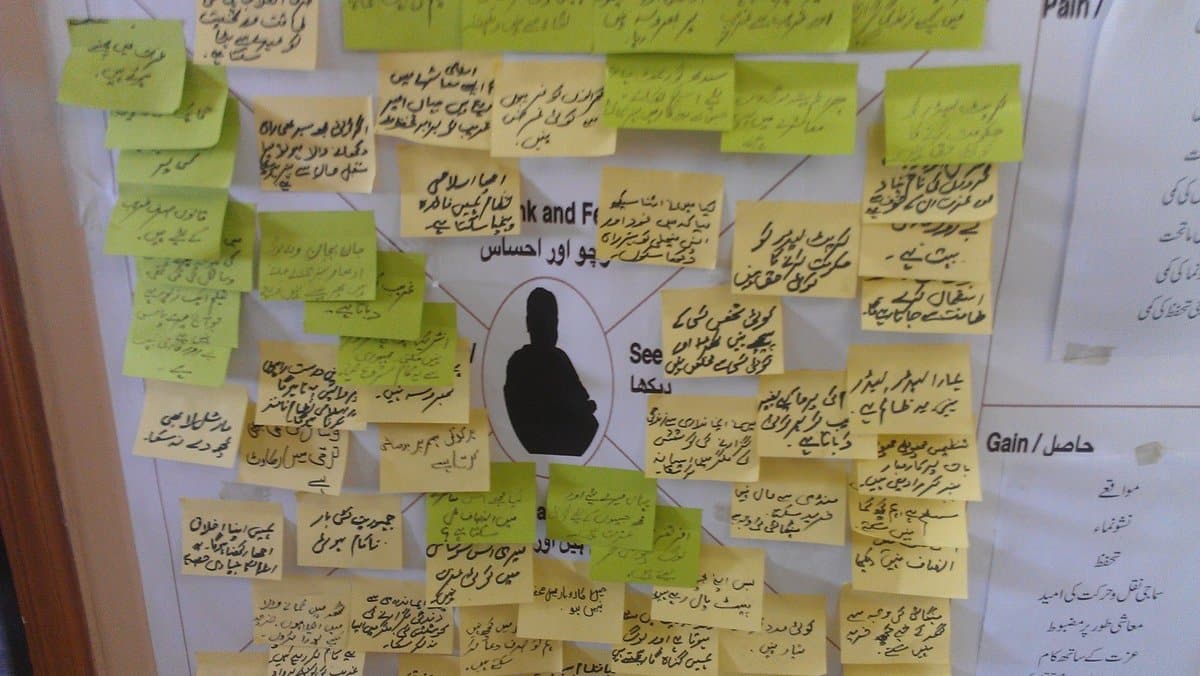
So we watched them, wrote it up, and everyone else read our summary rather than the videos. Looking back, what we were doing was less analysis than translation, from the formats the field worked in to the format a decision needed.
I didn’t have a word for it then, but I do now: we were human middleware.
And we weren’t translating for anyone above us, because we were the decision-makers too, and the translation was so that we could plan the next quarter.
The job nobody designed
Middleware is the software that sits between two systems that don’t talk to each other: it reads from one, reshapes what it read, and writes it into the other, and nobody notices it until it breaks.
Human middleware is the work people do to move information from the shape it arrives in to the shape a decision needs. Read the channel. Reshape the update. Write it into the next format up.
What struck me, looking back, is how small we were: a self-funded programme with small local teams, volunteer coaches, no systems budget, no CRM, nobody whose job was to pull the reports together, and a flat organisation. Even at that size, adding a second team and then a third was enough to turn a routine into two weeks of evenings.
Growth only exposed the problem. Every new team brought its own format and nothing in between translated them, so we did, and it had been a design problem all along.
Now scale it to 300 people
In a midsized organisation the field team is every team. The WhatsApp is still WhatsApp, plus Slack, Teams, email, Jira, the CRM and the finance system, and the running commentary never stops.
And there, the human middleware has a job title: manager.
Team leads read the channels and write the weekly update, heads of department read the weekly updates and write the monthly pack, and someone near the executive team reads the monthly packs and writes the board paper. Each layer reads, reshapes and passes it up, which looks like management, though a lot of it is translation.
I’m not going to put a percentage on how much of a manager’s week this takes, because I’ve seen plenty of estimates and I don’t trust any of them enough to quote.
It doesn’t have to work that way. A senior leader in Lebanon, rebuilding a sales organisation after the war, ran it on one rule: “Fifteen minutes every morning, a truthful weekly review, and managers removing one blocker a day.”
There’s no monthly pack in that sentence, and the rule spends a manager’s time on blockers instead of translation.
What gets lost in status reporting?
Our quarterly summaries got the numbers right and lost the reason. When a participant’s revenue dropped, the sheet said so, but why it had dropped was in a video, in their own words, and our summary carried one line of it at best.
A report passed up through layers of managers loses the same thing, a little more at every layer.
I’ve been the translator in that chain myself. Across eleven markets at a global FMCG company, I ran an internal State of Agility survey and wrote up the report. Nine months later I ran it again, with more than twice as many people answering.
Every figure in the second report was true, and it answered the question its readers were asking, which was how we compared with the rest of the industry. We compared well.
What it didn’t carry was what lay underneath. The regional figure for collaboration was a few points lower than in the January survey, and beneath it the markets were far apart, some near the top of the scale and some well below, with one regional average carrying all of them. Why they differed never made it onto the page.
The headline survives the journey up the chain while the reason doesn’t, and the person who knew the reason is three layers away.
The second loss is time. A decision that waits for the monthly pack waits for the slowest layer to finish translating. I’ve written before that فیصلہ میں تاخیر رفتار کے بارے میں شاذ و نادر ہی ہوتی ہے۔, and this is one of the places it hides, in the waiting to be told rather than in the deciding.
What happens when AI finds the translation?
I wrote recently that AI does not create redundancies, it makes them visible. The integration layer is one of the first places it will look, because translation is exactly the kind of work it does fast.
When leaders see it, they face what looks like one decision and is actually two: they can remove the managers, or they can remove the translation and give the managers back the part of the job that was always theirs, which is judgement, coaching and deciding.
Those two decisions don’t have the same consequences, and neither can honestly be blamed on the technology.
Your managers aren’t the problem. They’re filling a gap. Nothing in the organisation turns what happens on the ground into something leaders can decide with, so people do it, by hand, every week.
At Peace Through Prosperity it cost two of us two weeks a quarter. In a 300-person organisation the two weeks never end, and that is worth fixing before anyone decides it’s a headcount problem.
So here’s my question
If your managers stopped writing status updates for a month, what would you actually lose, and who would notice first?
If this shows up in your organisation, I’d love to compare notes over a virtual chai: grab 20 minutes on my calendar.
This is the first of three posts on what happens when the field reports faster than anyone can read it. Next: what happened when we handed the reading to AI, and why the answers stopped agreeing.
پڑھنے کے لیے آپ کا شکریہ۔ اگر آپ یہاں نئے ہیں تو میں کبیر شیرازی ہوں، میں لوگوں، ٹیموں، تنظیموں اور کمیونٹیز کو جمود سے گزرنے میں مدد کرتا ہوں اور تعاون کرنے اور اثر فراہم کرنے کے بہتر طریقے تلاش کرتا ہوں۔.