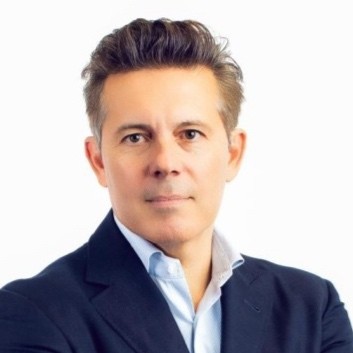
Looking to hire an enterprise transformation leader? Let’s talk.
By the time I get the call, the strategy is usually fine.
There is a steering group. There is a roadmap. There is a governance pack that says all the right things, and somebody senior has been made accountable for the outcome. And nothing is moving.
Transformation rarely stalls because the strategy was wrong. It stalls because the governance changed on paper while the decision system underneath it stayed exactly as it was.
That is the work. I redesign how organisations decide, fund and execute, so that whatever way of working you have chosen can actually land. Over twenty years I have done it inside regulated multinationals and public bodies: Novartis, Bayer, Sandoz, JTI, Westminster City Council and Croydon Council. I work at Board and Executive Committee level, from strategy through to delivery, and I stay close enough to the delivery to know whether the design survives contact with the work.
No pitch. No proposal until we have talked. Twenty minutes over a virtual tea, to find out whether there is something here worth exploring.
The measure is not what was proposed during an engagement. It is what is still running six months after the invoicing stops.
→ 5× validated return on a €0.7m regional transformation mandate, acknowledged by the Regional President (JTI, MENEAT region)
→ $990K of working capital unlocked in a single market through portfolio prioritisation discipline
→ 82% cross-functional collaboration against a 59% global benchmark, and 97% leadership engagement against a 32% industry average, and 70% of respondents reporting faster decision-making, across eleven markets
→ Digital product delivery cycles from six to nine months down to two to four weeks (Novartis). Time to market from fourteen months to three in a GxP-regulated environment (Bayer)
→ A stalled AI-powered citizen service unblocked and live inside a six-month mandate (Westminster City Council)
→ Use cases stalled in analysis, costed into a £1.6m investment portfolio in four months (seven business cases across nine use cases), with the delivery model, tooling and artefacts handed over to internal teams (Croydon Council)
Mandates have included direct accountability for regional transformation investment and embedded delivery inside global headquarters environments in Basel and Geneva.
What clients say
“Kubair brings clarity where systems are under pressure. He helped local leadership and functional teams sharpen prioritisation, reduce decision latency, and strengthen ownership across markets, without adding bureaucracy or process overhead.”
Vitalija KanevičienėGM, Vice President, Middle East & Shisha, JTI
“Kubair played an instrumental role in one of the key AI initiatives in Oncology in product development and delivery. His entrepreneurial spirit, creative thinking and collaborative drive helped our team on our digital transformation journey.”
Tatiana SorokinaExecutive Director, Analytics & AI Transformation, Novartis
“Kubair combines systems thinking with deep respect for local context and delivers capability that lasts. I would strongly recommend him to organisations building resilient leadership capability in complex environments.”
Paulo VeigaVice President General Management, JTI
“He exuded passion & enthusiasm, not just for his area of expertise but for helping others build their understanding &
knowledge… The work he and the team led really made a difference on our journey.”
Becky ChapmanChief Digital & Innovation Officer, Westminster City Council
Kubair supported us on a key digital product requiring significant crossfunctional collaboration across the organisation. His expertise was incredibly valuable to bringing the teams together, anticipating & resolving challenges on the way. Kubair is a great communicator full of contageous passion for what he does; he inspired the teams and changed the way how we think and work today.
Joerg SerafimovGlobal Head Tender Operations, Sandoz
What people reach out about
A programme that has stopped moving.
Governance on paper. Delivery in treacle. Everyone in the room can name the problem and nobody can name who fixes it.
I run structural resets of how an organisation decides, funds and executes: decision rights, portfolio prioritisation, funding mechanisms, execution cadence. The aim is that cross-functional alignment holds when it is under pressure, which is the only time it matters.
At Westminster City Council that meant unblocking a stalled AI-powered citizen service and getting it live inside a six-month mandate. At Novartis it meant digital product delivery cycles falling from six to nine months down to two to four weeks. At Bayer, in a GxP-regulated environment, time to market went from fourteen months to three.
Nobody in those organisations was slow on purpose. They were slow because nobody was sure whose call it was.
AI adoption that has stalled between the pilot and the organisation.
In 2012 my team built a robot that watched you approach through a Kinect sensor and asked how it could help. We called it HAL, Hotel Assistant Liaison, which felt funnier at the time than it does now. It never reached a hotel lobby. The startup ran out of money first.
The question it was built around has stayed with me. What happens to an organisation when a machine starts measuring the gap between what people need and what the organisation has designed itself to deliver?
In 2018 I put machine learning into production with the Zykadia commercial team at Novartis, predicting physician behaviour four months ahead in oncology. The model worked. Then the predictions sat in a queue between data science, marketing and sales, because nobody had designed the handoff. We spent three months tuning the algorithm. We should have spent the first month on the handoff.
In 2026 I led digital, data and AI transformation delivery at Croydon Council: 114 use cases with nothing shipping, first AI products piloted with service teams inside six weeks, and a £1.6m investment portfolio in front of the steering group within four months.
AI does not create organisational problems. It timestamps the ones already there.
So the work I do here is rarely about the models. It is about decision latency, accountability, and the handoffs nobody has designed, all of which become measurable the moment an agent produces something and nobody picks it up.
Hire enterprise transformation leader: the right moment, and the wrong one
Most people reach this page having typed “hire enterprise transformation leader” into a search box, which is not a phrase anyone says out loud, including me. What it usually means is: something is stuck, and I am not sure whether the problem is the plan or the machinery underneath it.
If that is roughly where you are, the more useful question is not who to bring in. It is whether this is the moment to bring anyone in at all.
The most common mistake is not hiring the wrong person. It is hiring at the wrong moment.
The right moment is when the programme has a mandate and a budget and still is not moving, and the reason sits upstream of delivery. The wrong moment is before anyone has the authority to change how decisions get made, because then you are buying a report about a problem the organisation already knows it has.
If you are not sure which of those you are in, that is worth twenty minutes on its own.
Enterprise transformation leader, or change manager?
Executives ask me this when they know something is not working but are not sure what kind of help they need. It is a fair question and the distinction is real.
A change manager works inside an existing programme structure: communications, stakeholder engagement, adoption plans, for a change that has already been designed. The work I do sits upstream of that, on the decision systems, governance structures and organisational conditions that determine whether the change was ever possible.
The distinction I draw is between a structural governance reset and a methodology rollout. A methodology rollout installs a new way of working. A structural governance reset changes how the organisation decides, funds and executes, so that any way of working can land.
One is faster. The other is what makes the result hold once external support steps away.
If your programme has stalled, a change manager will help you execute it better. I will help you work out why it stalled, and what has to change at the system level before execution can succeed.
What working together looks like
Every engagement is shaped around the problem and the scope. Some are fractional. Some are full time. They have run from three months to several years, and there is no standard package.
The pattern holds, though.
Discover. Co-create. Build internal capability. Get out.
The measure is the one above: what is still running six months after the invoicing stops.
The first step is a short discovery conversation. Twenty minutes, over a virtual tea. No pitch. No proposal until we have talked.
Looking for something else?
Community and social innovation. Through Peace Through Prosperity, the social innovation lab I co-founded with my wife Sahar, we work with micro-entrepreneurs in eight countries. Over 4,000 people so far, building businesses that employ other people.
Governance and civic engagement. I co-founded Better Government, a think tank working on civic engagement, institutional accountability, and governance systems designed to serve the people they are meant to serve.
Speaking. I speak on decision systems, systems thinking and enterprise change. Recent stages include Global Scrum Gathering Lisbon, Lean Agile London and Agile Estonia. Send me the brief.
Workshops. If you would rather start with a working session than an engagement, I also run agile transformation workshops for leadership teams and delivery teams.
Questions about hiring an enterprise transformation leader
When is the right moment to hire an enterprise transformation leader?
When the programme has a mandate and a budget and still is not moving, and the reason sits upstream of delivery. The wrong moment is before anyone has the authority to change how decisions get made, because then you are buying a report about a problem the organisation already knows it has.
What is the difference between an enterprise transformation leader and a change manager?
A change manager works inside an existing programme structure, on communications, stakeholder engagement and adoption for a change that has already been designed. My work sits upstream of that, on the decision systems, governance structures and organisational conditions that determine whether the change was ever possible.
What is a structural governance reset?
It changes how the organisation decides, funds and executes, so that any way of working can land. A methodology rollout installs a new way of working. One is faster. The other is what makes the result hold once external support steps away.
What if our programme has already stalled?
A change manager will help you execute it better. I will help you work out why it stalled, and what has to change at the system level before execution can succeed.
How do I start?
With a twenty-minute conversation. You can book one through my calendar. The worst outcome is a useful conversation.
Not sure whether it is worth reaching out?
It probably is, if any of this sounds familiar.
Your programme has lost momentum and you suspect the problem is the decision system rather than the delivery. You are running a conference and want a speaker who can bridge enterprise agility and social change without losing a senior room. You are leading a community or a government body and want an approach to grassroots change that does not depend on large budgets or a standing army of consultants.
If none of that fits precisely but something here landed, reach out anyway.
Kubair Shirazee is an enterprise transformation leader with over twenty years redesigning operating models and decision systems across pharmaceuticals, FMCG, healthcare, public sector and digital platforms. He works through AgiliTea Ltd (UK), across the UK, EMEA and the Gulf. He has been published in Cutter Consortium, Management Today, Business Leader and Authority Magazine.