Start Small, Make It Matter
What is the RIPPLE Light framework?
The RIPPLE light is the lightest version of RIPPLE. It’s a 4-week experiment designed to help small teams make meaningful improvements with minimal setup.
Try a Lightweight RIPPLE Experiment
Rapid Impact through People, Practices, Learning & Engagement
It’s how you start a culture shift without waiting for permission.
No jargon. No heavy processes. Just people coming together to fix what matters.
How the 4-Week RIPPLE Light Experiment Works
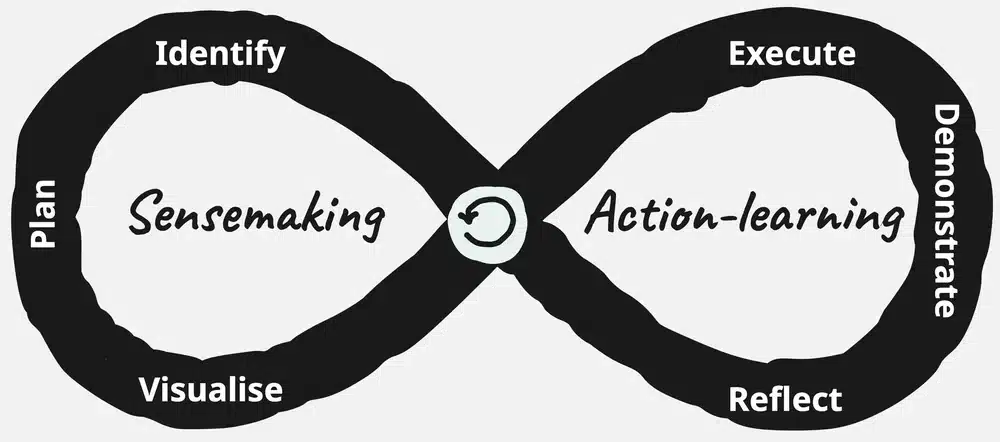
A small team. A shared challenge. A simple cycle.
That’s it.
7 Steps to Run Your Experiment
| Step | What to Do |
|---|---|
| 1. Form a Team | Gather 3–5 volunteers from different roles. No hierarchy, just shared interest. |
| 2. Pick a Problem | Choose one small but real improvement to make in 4 weeks. e.g. reduce turnaround time, improve handoffs, cut duplication |
| 3. Plan Together (Week 1) (45 minutes) |
|
| 4. Use a Visual Board | Set up a basic task board (post-its, Miro, MS Planner, whiteboard). Keep it visible. |
| 5. Check In Weekly (15 minutes) | Sync up 1–2x per week. What’s done? What’s blocked? What’s next? |
| 6. Demo Day (Week 4) (30 minutes) | Show what you created. Share results. Reflect together. Invite feedback. |
| 7. Optional Retro (30 minutes) | What worked? What didn’t? What’s next? Keep it casual, but honest. |
What Good Looks Like After 4 Weeks
You made something better
Your team felt ownership and energy
Someone outside your team noticed and showed interest
You want to do it again.
RIPPLE Light in Practice: Real Teams, Real Results
This approach has been tested in global enterprises, public institutions, and grassroots teams.
It helps people move from talk to action, and from silos to collaboration. All in just 4 weeks.
Why RIPPLE Light Works for Small Teams
RIPPLE isn’t about big transformation projects, it’s about people owning change.
When people see small, real improvements delivered fast, they pay attention.
They copy. They ask questions.
That’s how culture changes.
One ripple at a time.
Ready to Run Your RIPPLE Light Experiment?
Tools and Resources for Your RIPPLE Light
Ways of Working Canvas
Set your team up for clarity, rhythm, and shared success. Download canvas here:
How to Use This Canvas:
Print it out or share it digitally during your team kick-off session.
Work through each topic together, ideally in the first 15–20 minutes of your first meeting.
Keep it visible: in your Miro board, Slack pin, or task tracker.
Review it weekly during check-ins or retrospectives to keep it fresh and relevant.
Why It’s Worth Using:
Builds shared understanding fast
Prevents common breakdowns (e.g. unclear expectations, unspoken frustrations)
Reduces friction and confusion across roles and rhythms
Encourages self-managed, agile behaviours from the start
Lays the foundation for trust and continuous improvement
Plan Together Guide – Alignment
Purpose: This session helps the team clarify their goal, break down the work, and align on how they’ll deliver their first improvement.
Structure (45 minutes)
1. Revisit the Problem (10 mins)
What are we trying to improve?
What outcome would make us proud in 4 weeks?
Clarify assumptions and context
2. Define What “Better” Looks Like (10 mins)
Describe the desired change in one sentence
Identify 2–3 indicators of success (e.g., faster, clearer, fewer errors)
3. Break It Down (15 mins)
What small tasks or actions will help us move toward this outcome?
Capture them on your Kanban board
Identify any blockers or dependencies
4. Set Check-In Rhythm (5 mins)
Confirm how and when you’ll check progress (e.g., twice per week)
5. Confirm Ownership (5 mins)
Who’s leading each task?
Who needs support from whom?
Tip: Don’t aim for perfection, aim for momentum. Keep things moving and adapt as you go.
Simple Task Board Templates (Miro / MS Planner/ Wall)
Purpose: Visibility is everything. A basic Kanban board makes work transparent and helps the team stay aligned.
Columns to Set Up:
Backlog – All ideas and tasks we might do
To Do – What we’ve committed to this week
Doing – In progress
Blocked – Something’s in the way
Done – Completed and delivered
Usage Tips:
Keep cards/tickets short and clear
Use emojis or color tags for ownership or urgency
Update at every check-in, this is your visual source of truth
Weekly Check-In Guide – 15 Minutes of Focus
Purpose: A short, focused sync to keep momentum, surface blockers, and stay aligned.
When:
Once or twice per week (e.g. Monday & Thursday)
Keep it consistent and timeboxed at 15 minutes
Structure:
1. What’s Done? (5 mins)
Share completed tasks
Highlight wins or surprises
2. What’s Blocked? (5 mins)
Identify anything stuck or unclear
Ask for help, escalate if needed
3. What’s Next? (5 mins)
What’s the next priority for each member?
Reassign if someone is overloaded
Tips:
Use your Kanban board to walk through the check-in
Keep it moving, it’s not a discussion, it’s alignment
Save deeper problem-solving for outside this session
Tip: End with one reflection: “Are we still on track for our goal?”
Demo Day Tips – Keep It Real, Keep It Simple
Purpose: Demo Day is your moment to show what your team improved over the last 4 weeks. It’s not about being perfect, it’s about learning, sharing, and celebrating.
Before the Demo:
Prep a simple story:
What was the challenge?
What did we try?
What’s better now?
Bring visuals:
Show the before-and-after (screenshots, photos, stats, quotes)
Use your Kanban board to walk through progress
Practice clarity, not polish
Stick to 10–15 minutes max for the share-out
Save 15 minutes for Q&A and feedback
During the Demo:
Tell the real story – what worked, what didn’t, what you learned
Keep it human – let different team members speak
Invite feedback – ask: “What stands out to you? What might we try next?”
Document the feedback – it fuels the next sprint
Optional Retro Guide – Reflect and Refocus
Purpose: A retrospective helps the team pause, reflect, and adapt. It’s a safe space to learn from experience and plan how to improve next time.
When:
At the end of each sprint (typically after Demo Day)
Keep it light – 30 to 45 minutes is enough
Structure:
1. What Went Well? (10 mins)
Celebrate small wins
Recognise team collaboration and effort
2. What Was Challenging? (10 mins)
Surface blockers or frustrations
Be kind, be curious, not critical
3. What Should We Change or Try Next? (10 mins)
Identify 1–2 things to do differently next sprint
Keep it practical and team-owned
4. Close with a Pulse Check (5 mins)
Quick round: How’s the team feeling?
One word or emoji check-in
Tips:
Use a virtual board or sticky notes to gather input
Rotate facilitation to keep it fresh
Remind the team: This is about learning, not blaming
Tip: If nothing changes after a retro, people stop being honest. Choose one thing to act on and follow through.
Refinement Canvases: Clarify, Deconstruct, Deliver
Purpose:
These two lightweight canvases help teams break down complexity, from shaping the “why” of an initiative to defining how to deliver it. Use them sequentially to turn ambiguity into action.
Use this to clarify purpose and define success.
What: What change or improvement are we aiming for?
Why: Why does this matter? What’s the driver or need?
Done: What will success look like? How will we know we’ve achieved it?
Outcome: Shared understanding of intent and what “done” means.
Use this to map the path forward.
What: Break the work into specific actions or deliverables.
Why: For each, explain why it’s important, what it unlocks.
How: Define the approach, tools, methods, resources, support.
Outcome: A clear, team-owned roadmap that guides execution.
When to Use:
During team planning or refinement sessions
When work feels vague or overwhelming
When aligning multiple perspectives or stakeholders
Benefits:
Brings clarity to complex work
Anchors execution in shared purpose
Makes invisible assumptions visible
Accelerates focused delivery
Talk to your coach
Grab a slot here.
“Never doubt that a small group of thoughtful, committed citizens can change the world. Indeed, it’s the only thing that ever has.”
Margaret Mead
If you want to take the experiment further, see the Grassroots Impact Challenge and the Grassroots Playbook.
RIPPLE Light questions
What is RIPPLE Light?
The lightest version of RIPPLE: a four-week experiment that helps small teams make meaningful improvements with minimal setup. RIPPLE stands for Rapid Impact through People, Practices, Learning and Engagement.
Who takes part, and for how long?
A small team of three to five volunteers from different roles, over four weeks. There is no hierarchy, just shared interest in fixing something that matters.
How often should the team check in?
Once or twice a week for 15 minutes. Ask what is done, what is blocked and what is next, and use your visual board to walk through it.
What does good look like after four weeks?
You made something better, your team felt ownership and energy, someone outside the team noticed and showed interest, and you want to do it again.